What is EMDR?
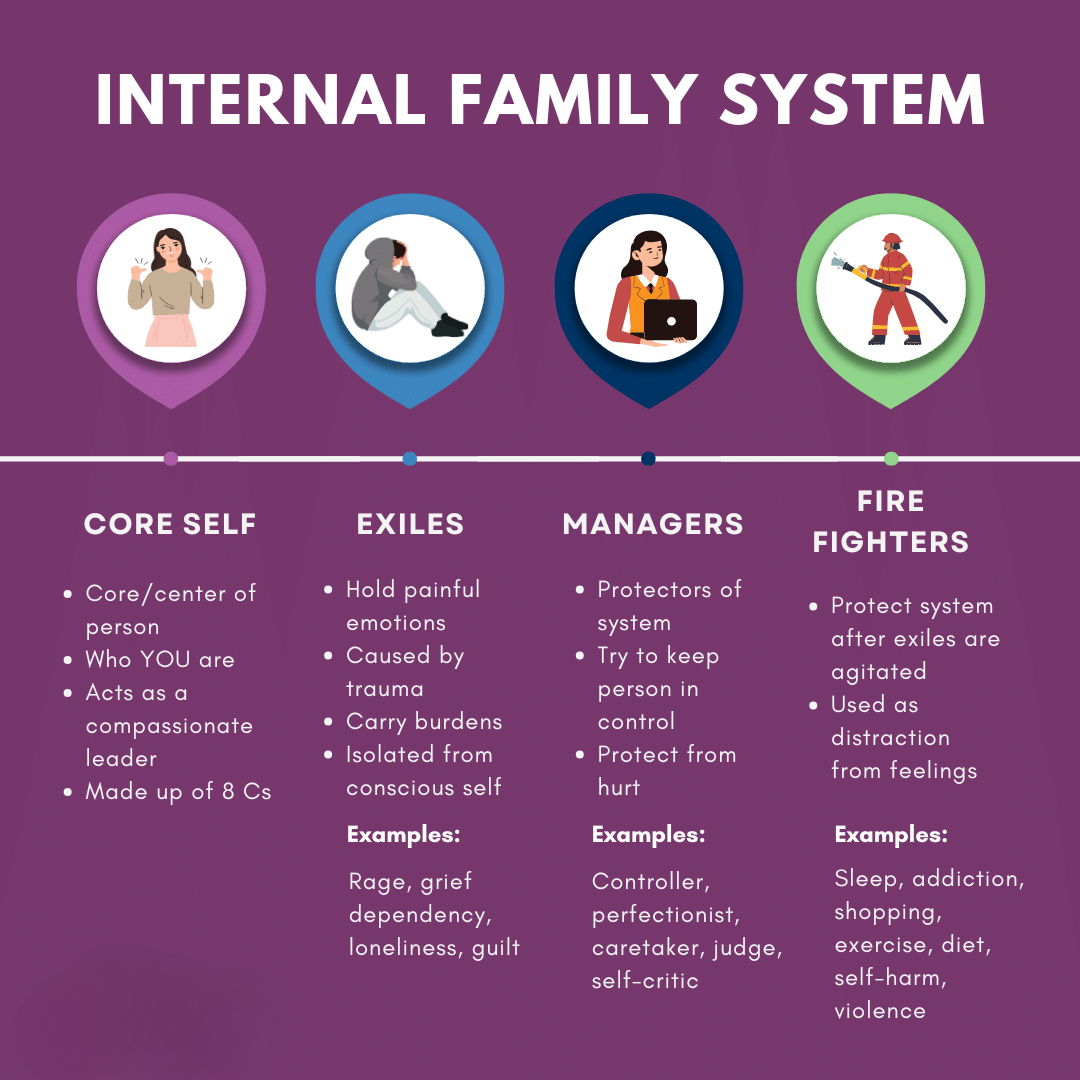
Internal Family Systems (IFS) is based on the idea that we all have different “parts” of ourselves that developed to help us survive life’s challenges.
For example, you might notice parts of you that:
try to please others
avoid conflict
stay hyper-vigilant
overthink or control situations
These parts often formed earlier in life as ways to cope with difficult experiences. At one time they were intelligent strategies for survival, even if they now create problems in adulthood.
IFS therapy helps you develop a stronger connection to your core Self — the calm, wise, and grounded part of you that can understand and guide these protective parts rather than being controlled by them.
Instead of fighting these patterns, we begin to work with them compassionately, helping your internal system become more balanced and integrated.
Over time, parts that once had to work overtime to keep you safe can begin to relax, allowing you to feel more grounded, more connected, and more like yourself.
What is IFS?
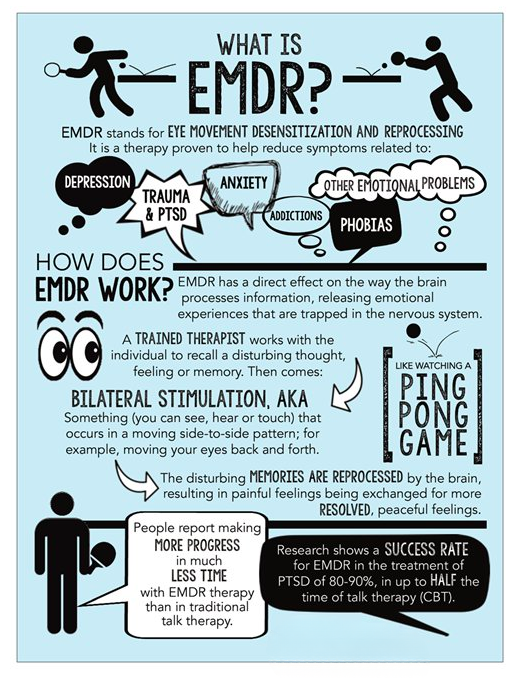
Sometimes difficult or traumatic experiences become “stuck” in the nervous system. Even when we logically know something is over, the body can still react as if the threat is happening now.
Our brain tries to make sense of these experiences by attaching meaning to them. For example, a child who grows up feeling unseen or unsupported might unconsciously form beliefs like “I’m not good enough.” These beliefs — called negative cognitions in EMDR — can quietly shape how we see ourselves and the world for years.
The same thing can happen after larger events, like accidents or sudden trauma. The brain stores the memory with intense emotion, and the nervous system stays on alert long after the event has passed.
EMDR (Eye Movement Desensitization and Reprocessing) helps the brain finish processing these experiences. Using bilateral stimulation (such as guided eye movements), EMDR allows the nervous system to revisit memories safely while the brain reprocesses them.
As this happens, the emotional intensity of the memory decreases and the brain can finally recognize that the experience is in the past.
Many people begin to notice shifts like:
painful memories losing their emotional charge
feeling calmer and less reactive
new, healthier beliefs about themselves
EMDR is an experiential therapy, meaning we work directly with the nervous system rather than only talking about the past. For many people, this allows change to happen more deeply and more quickly than traditional talk therapy alone.
EMDR + IFS for Trauma Work
When EMDR and Internal Family Systems (IFS) are used together, the work allows both the nervous system and the deeper emotional patterns behind it to heal.
EMDR helps the nervous system gently process memories that still carry emotional intensity. As those memories become less overwhelming, it becomes easier to notice the different “parts” of ourselves that formed around those experiences.
IFS helps us turn toward those parts with curiosity and compassion rather than trying to push them away. Many of these parts developed earlier in life to protect us or help us survive difficult situations.
Through this process, people often begin to understand why certain reactions, beliefs, or patterns show up in their lives. Instead of feeling hijacked by those responses, there is more space to notice what is happening and respond from a calmer, wiser place.
Over time, the nervous system becomes less reactive, and these protective parts no longer have to work so hard. This allows your core Self — the grounded, compassionate center within you — to take a more active role in how you move through life and relationships.